
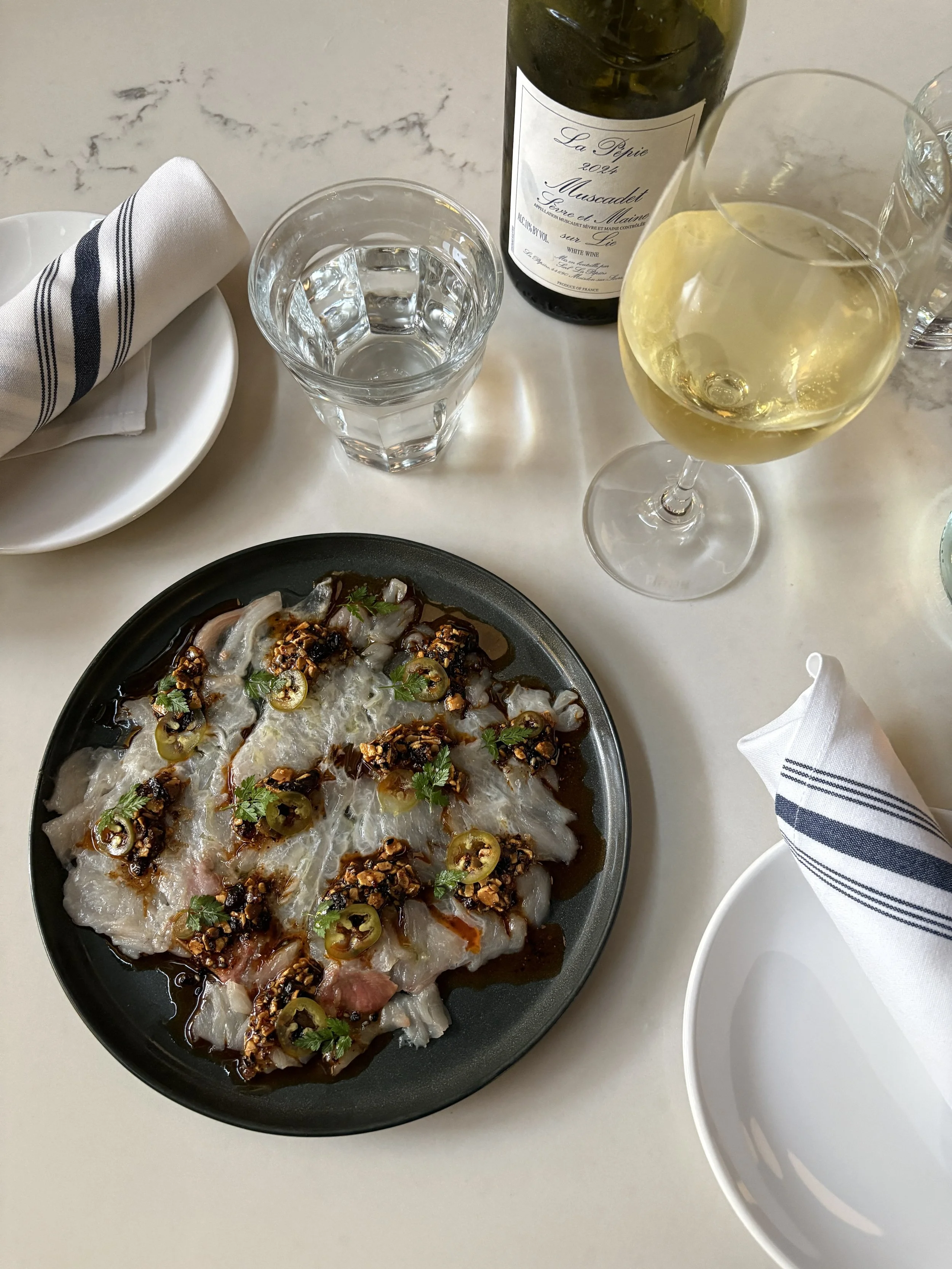
Hamachi Carpaccio
Salsa macha, pickled serrano, kumquat kosho
Carpaccio has one of the better origin stories in food. In 1950, Giuseppe Cipriani, founder of Harry's Bar in Venice, invented the dish for a countess whose doctor had recommended she eat only raw meat. Rather than serve her something sad, he sliced beef paper-thin and dressed it in what he called a "universal sauce." He named it after Venetian Renaissance painter Vittore Carpaccio, whose vivid reds and whites had just been the subject of a major exhibition in the city. The name stuck, and so did the format, eventually expanding well beyond beef.
Which brings us to hamachi. Hamachi (yellowtail) has been part of Japanese culinary tradition for centuries, prized for its rich flavor, tender texture, and the kind of clean, buttery richness that makes it ideal for eating raw. That richness is the whole point here: it holds up to the heat of salsa macha, the brightness of pickled serrano, the citrusy funk of kumquat kosho.
A glass of wine alongside is, as always, a good idea.
Santé